
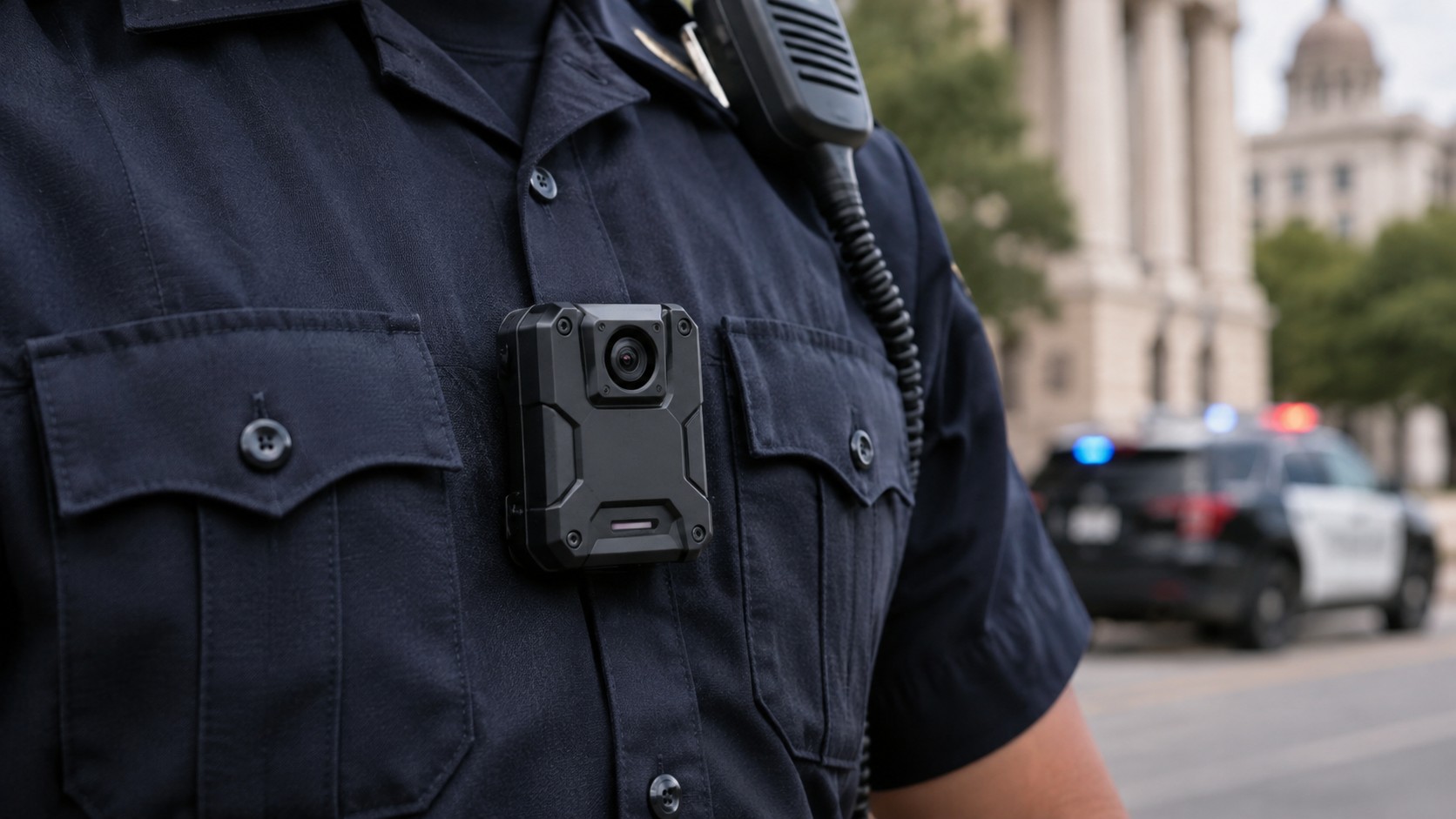
Video From a Traffic Stop or Arrest Can Expose Gaps in a Police Report and Open the Door to a Dismissal
Police body camera footage can dramatically impact a Texas criminal case. In June 2026, a body camera video from Montgomery County went viral. It showed a sheriff’s deputy arresting a Conroe woman during a traffic stop. The deputy had pulled her over for failing to signal and for dim license plate lights. She was later charged with interfering with public duties and resisting arrest, KPRC 2 reported.
Fortunately, the deputy’s body camera captured what actually happened. The video showed the deputy giving commands from behind his patrol car instead of first approaching the driver. A retired police captain who reviewed the footage for KPRC 2 said nothing on the video showed an obvious threat. That’s the power of video. It can show what really happened in real time, not just what one officer wrote down later.
Whether footage helps or hurts depends on what it shows and how closely someone looks at it. Our Conroe criminal defense lawyers at The Webb Firm, P.C. know how both sides use this evidence. Founding attorney Amanda Webb is a former Montgomery County prosecutor, and that experience showed us how the state builds its cases and where those cases are weakest.
|
Key Takeaways
|
What Can Body Camera Footage Show About A Traffic Stop Or Arrest?
Body cameras record what a police officer sees and hears from the start of an encounter. That footage can capture details a written report often leaves out, including:
- The Reason for the Stop – Video may show whether the officer had a valid reason to pull someone over, such as a traffic violation.
- How Commands Were Given – Footage can show whether an officer explained the stop, raised their voice, or gave confusing orders.
- Field Sobriety Tests – In a DWI case, video can show weather, lighting, and road conditions during the tests.
- Searches and Consent – Video can show whether a driver actually agreed to a search or simply went along with an officer’s demands.
- Use of Force – Footage can show whether force was reasonable or whether an arrest escalated without cause.
Patrol car dash cameras can add even more detail. In the Montgomery County case, the fleet camera showed the moments before the deputy got out of his vehicle. Footage from several angles can fill in gaps that a single camera misses. Each piece of video helps the defense build a clearer picture of the encounter.
How Can Bodycam Video Contradict A Police Report?
Police reports are often written hours after an arrest. Officers rely on memory. They may also describe events in the way that best supports the charges. Small details and the use of certain words can shift the tone and meaning of a report. A calm tone of voice can become aggressive. A short pause can become a refusal to cooperate.
Video can tell a more complete story. In the Montgomery County case, the deputy’s report said he asked the driver to step out to explain the stop. The report didn’t cite safety concerns. A retired police captain said the video showed no obvious threat. Comparing the report to the footage helps the defense spot gaps like these.
When the video and the report don’t match, it can damage an officer’s credibility at trial. It can also give the defense leverage to seek a reduced charge or a dismissal. Even missing footage matters. If a camera was turned off or a key moment wasn’t recorded, the defense can ask why the officer didn’t film it before, during, or after the arrest.
How Does The Defense Get Body Camera Footage In Texas?
Texas law gives defendants a strong right to see the evidence against them. The Michael Morton Act is found in Texas Code of Criminal Procedure Art. 39.14. It requires prosecutors to share evidence after a timely request. That includes police reports, recorded statements, and video like body camera and dash camera footage.
The law is named for Michael Morton. He spent nearly 25 years in prison for a murder he didn’t commit. Evidence that could have helped him was never shared with his defense. Today, prosecutors must also disclose any evidence that could help the defendant. That duty continues throughout the case.
Time still matters. Agencies with body camera programs must keep recordings for at least 90 days. That rule comes from Texas Occupations Code § 1701.655. Some footage may not be kept much longer. We request the video quickly and make sure it’s preserved before it’s erased or destroyed.
Three Texas laws shape how body camera footage reaches a courtroom and whether the evidence it shows can be used at all.
| Law | What It Does | Why It Matters to the Defense |
|---|---|---|
| Code of Criminal Procedure Art. 39.14 | Requires prosecutors to share evidence, including video, after a timely request | Gives the defense access to body camera and dash camera footage |
| Occupations Code § 1701.655 | Requires agencies with body camera programs to keep recordings for at least 90 days | Footage can be lost if no one asks for it in time |
| Code of Criminal Procedure Art. 38.23 | Bars evidence obtained in violation of the law | Video of an illegal stop or search can get evidence thrown out |
Can Body Camera Footage Get Evidence Thrown Out?
Yes. Evidence obtained in violation of the law can’t be used against a defendant under Texas Code of Criminal Procedure Art. 38.23. Body camera footage can help prove violations such as:
- An Illegal Stop – If video shows there was no valid reason for the stop, evidence found afterward may be excluded.
- An Unlawful Search – Footage may show that a driver never gave consent or that an officer searched beyond what the law allows.
- A Prolonged Detention – Officers generally can’t hold someone longer than needed to handle the reason for the stop without new suspicion.
- Statements Made Without Warnings – Video can show whether officers questioned someone in custody before reading their rights.
When key evidence is thrown out, the state’s case may fall apart. Prosecutors may reduce the charges or dismiss the case entirely. That’s why a careful review of every second of video matters. It’s also why knowing what to do when you’re arrested can protect your rights from the start.
Let a Former Prosecutor Review Every Frame of Your Case
Police body camera footage can be the strongest evidence in your case, whether it helps or hurts. Prosecutors review it closely. Your defense attorney should, too. Missing the details in a video can mean missing your best chance at a dismissal or a reduced charge. That’s why experience matters when it comes to the lawyer representing you.
At The Webb Firm, P.C., Conroe criminal defense attorney Amanda Webb once served as a Montgomery County assistant district attorney. She knows how prosecutors evaluate video and police reports. Our team reviews the footage frame by frame and fights to hold the state to its burden of proof. If we see something that doesn’t add up or shows you did nothing wrong, we’ll put that footage to work in your defense.
Don’t wait for police video footage to disappear. Contact us for a free consultation. We can review your arrest, request important evidence, and explain your legal options. Our case results show what a strong defense can do. That’s why people charged with a crime in Conroe trust attorney Webb to fight for them.
“I was given a full explanation as to how the situation could be handled and it was handled in the manner that I was told. I am very grateful that I chose her to help me with my situation.” — Jose, ⭐⭐⭐⭐⭐
